
ARR Projects in India: What's Working, What's Challenging and What Buyers Should understand
When you visit a project site for the first time — no conference room, no slide deck, just land — there’s a moment where everything you thought you understood rearranges itself.
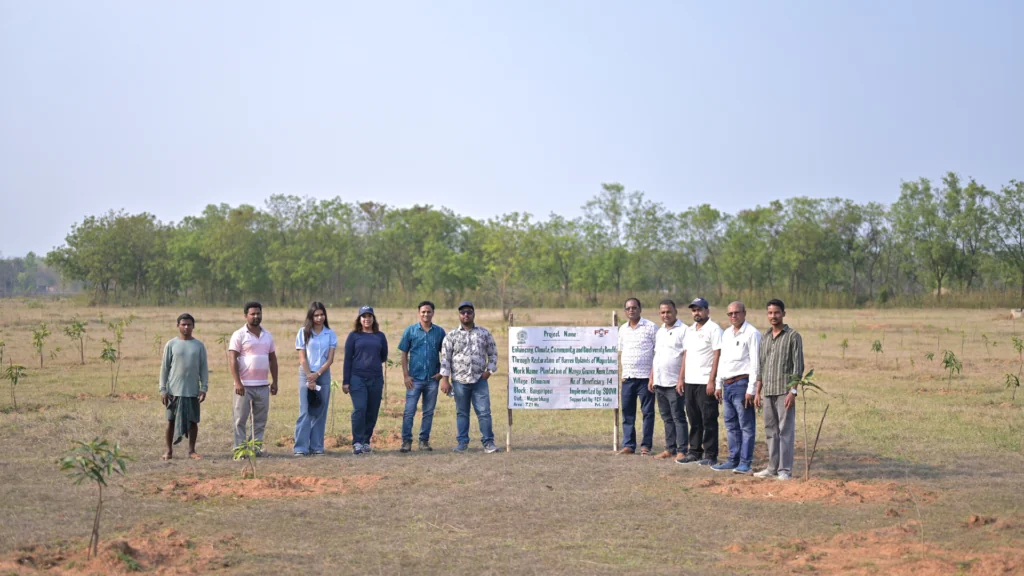
I had that moment in Mayurbhanj, Odisha, standing at the edge of a plot that tribal communities had been planting over the last few seasons. What was a barren land is slowly becoming a forest again. But what struck me wasn’t just the trees. It was the way the people talked about the land. Not as a project site. Not as a carbon asset. As theirs, something they had rescued, and something they were now counting on.
For many of these families, this land isn’t a climate story, it’s an income story. The difference between a season that works and one that doesn’t. That’s what pushed me to write this — because there’s a growing gap between how ARR projects are talked about in carbon markets and what they actually mean to the people involved in them.
First, the Numbers — Because They Matter
India has one of the most ambitious land restoration targets in the world. Under its updated NDC, the country has committed to creating an additional carbon sink of 2.5 to 3 billion tonnes of CO₂ equivalent through forest and tree cover by 2030. Land degradation currently affects around 100 million hectares across India, and the government has pledged to restore 26 million hectares of it by 2030.
ARR (Afforestation, Reforestation and Revegetation), is one of the few mechanisms that can move all three needles at once: carbon, land and livelihoods. And yet it remains underutilised in India’s voluntary carbon market. Long timelines, coordination overhead, buyer nervousness about nature-based solutions. The hesitation is understandable. But it’s also, increasingly, an excuse.
What the Field Actually Teaches You
Our project in Mayurbhanj is a 30-year ARR initiative under the Gold Standard, implemented by SOOVA. But being close to the work, one thing stands out: projects aren’t sustained by Technical frameworks alone; what makes them function on the ground is something far more practical and human.
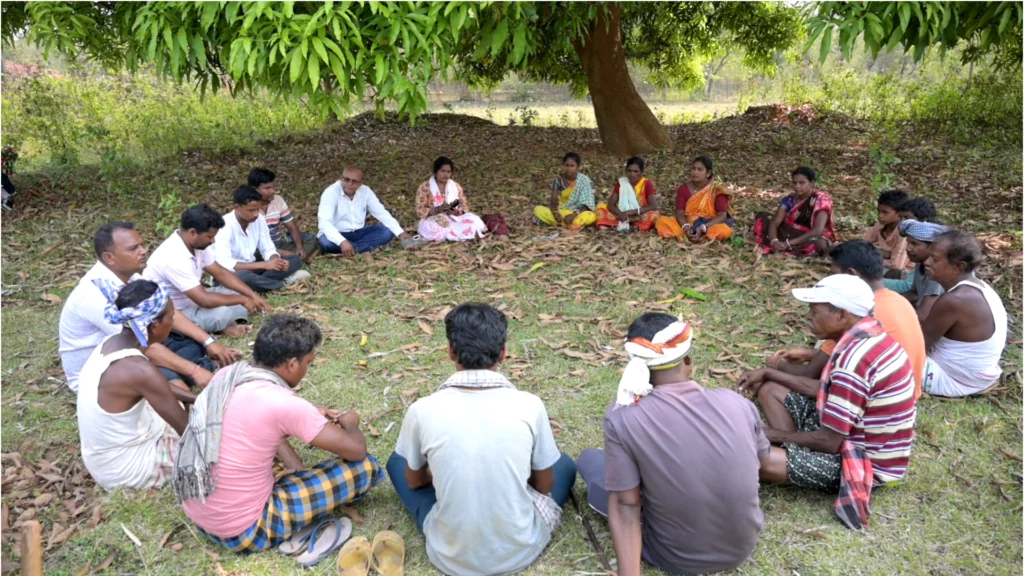
It’s a field coordinator who knows every participating family by name. A Gram Panchayat representative who convinced skeptical community members to trust the process not because of carbon markets, but because he believed in what the land could become.
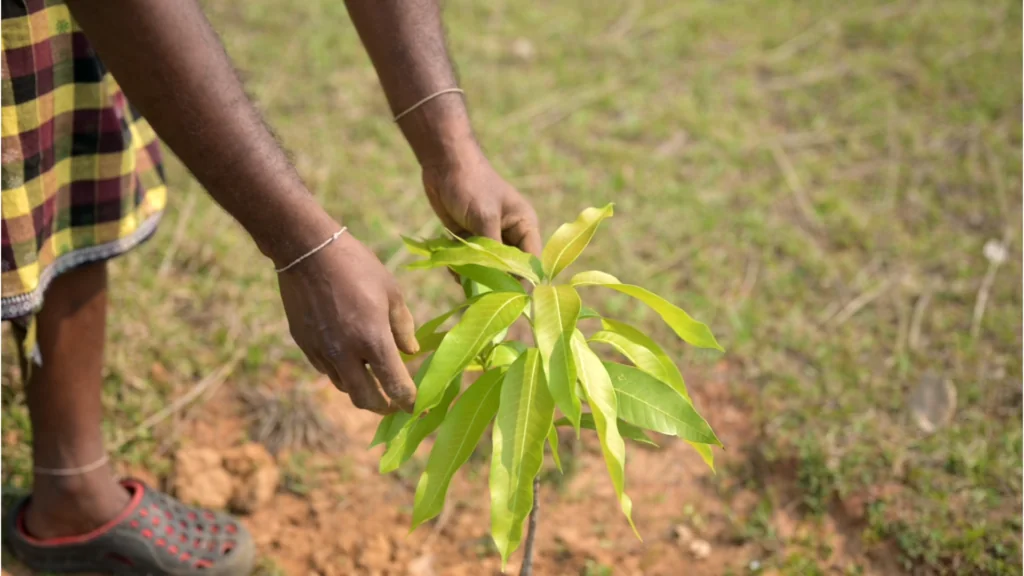
And it’s a woman in Mayurbhanj who walked us across her plot. This land was completely barren, before the project nothing grew here. First the plantation was done. Then, as the soil was cared for, intercropping is practiced in the farms which turn out as a short term income source. Today she grows vegetables and pulses between those saplings on land that had nothing to offer for years before that.
The Hard Parts Nobody Talks About Enough
A 30-year timeline is ecologically correct. It is also financially awkward. Communities invest labour, land, and trust for years before a single credit is issued. Intercropping which becomes possible once plantation stabilises the soil gives families a short-term income source while the trees build toward long-term carbon returns. It doesn’t happen on day one. But when the land recovers enough to allow it, it becomes one of the most tangible ways communities see the project paying off in their own lifetimes.
What separates a good ARR project from a great one comes down to the questions buyers are willing to ask — Who owns the land? How are community benefits structured? Is there a real livelihood component built in? What is the implementation partner’s track record? Asking these questions doesn’t slow down the market. It strengthens it and ensures that the projects doing the work right get the recognition and investment they deserve.
What Buying Right Actually Looks Like
A Gold Standard ARR credit from a project like Mayurbhanj isn’t just a tonne of CO₂. It’s sequestration on land that was barren for a long time, by communities who planted trees on faith and are now growing food in their shade. The biodiversity, soil recovery and livelihood benefits are real and verifiable. They were earned, not packaged.
Buying well means asking about the project, not just the price. The cost of a high-integrity ARR credit reflects real work field coordination, community benefit-sharing, rigorous verification. Squeezing that out doesn’t make the market more efficient. It makes it less honest.
The land in Mayurbhanj is coming back. The communities have already made their bet. The market now needs to decide if it has the same belief they do.