
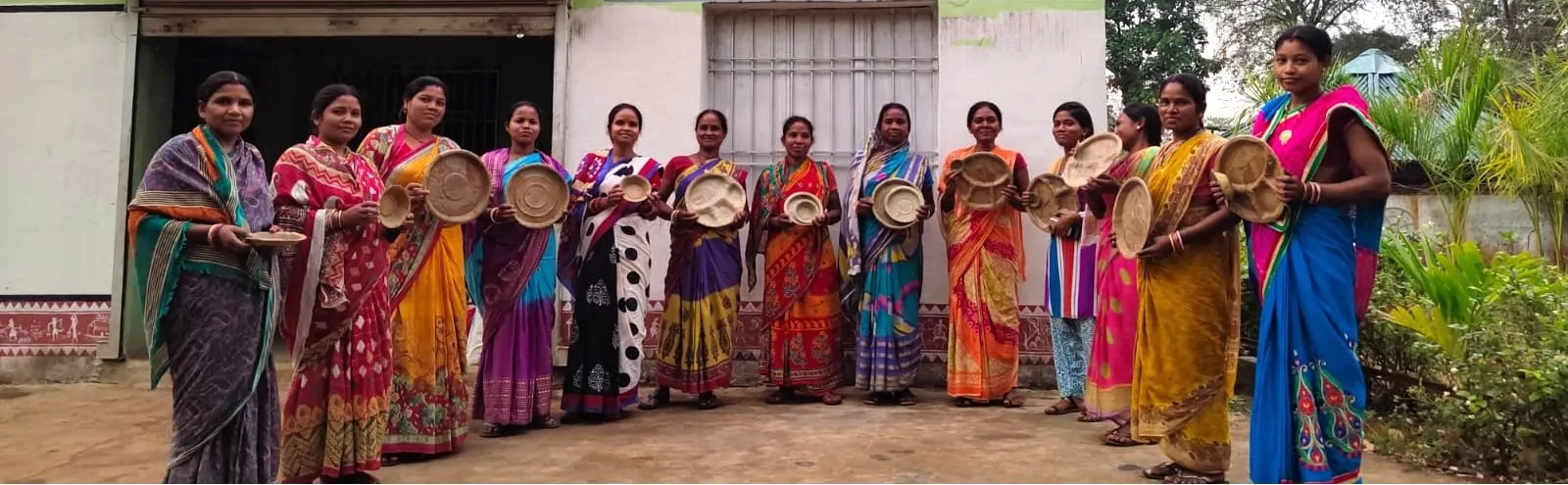
Women of Jai Maa Durga Devi Producer Company work together to turn traditional skills into sustainable livelihoods.
Women in Mayurbhanj district, Odisha, are emerging as key contributors to rural economic development, moving beyond traditional household roles. These women have traditionally supported local livelihoods through subsistence practices. Despite facing multiple challenges such as limited access to financial resources, social barriers, and restricted market opportunities, women in Mayurbhanj are progressively breaking through traditional boundaries. This initiative has enhanced their economic independence, leadership, and social standing, while promoting sustainable resource use, local traditions, and collective enterprise in the community.
Rooted in Mayurbhanj: When Initiative Turns into Enterprise
The women-led “Maa Durga Devi Producer Company”, a small-scale enterprise managed and operated entirely by rural women shows how empowering rural women can drive sustainable and community-based enterprise development. This initiative focuses on the collection, processing, and value addition of Non-Timber Forest Products (NTFPs) such as sal leaves, wild honey, and mahua fruits. The women produce a range of eco-friendly and value-added products, including sal leaf plates, mahua-based biscuits, ladoos, candies, chocolates, and other innovative food items.
The initiative has significantly enhanced the economic status of participating women while strengthening their leadership, decision-making, and social standing within the community. In addition to creating livelihoods, it contributes to preserving local traditions, promoting sustainable resource use, and fostering collective enterprise in rural Odisha, making it a shining example of women-led rural entrepreneurship.
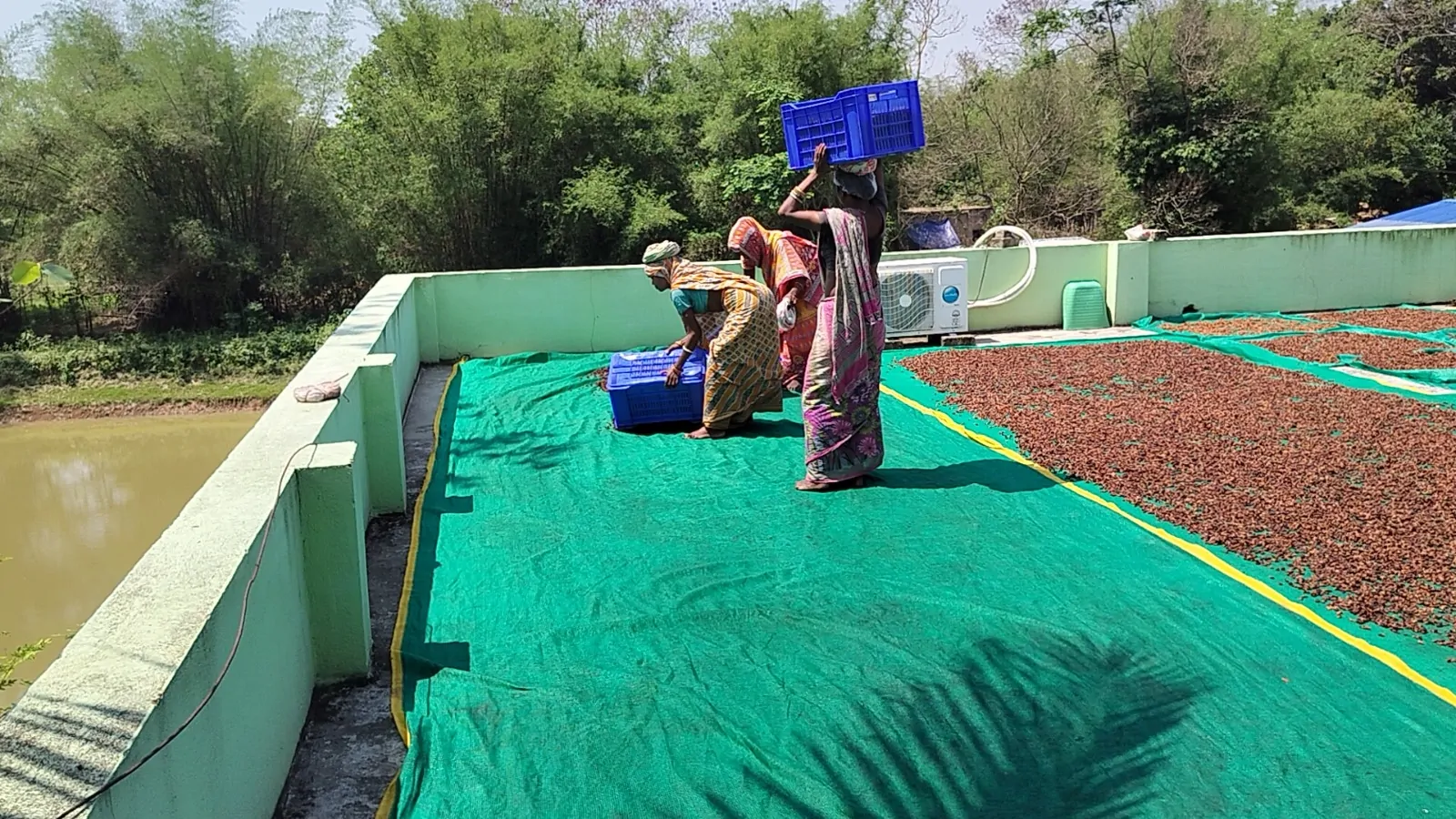
Traditional sun-drying of mahua seeds for quality by-product processing.
What’s Changing for Women?
1. Economic Independence & Decision Making
With collective sales and financial trainings, women now find better market opportunities and bring home regular earnings.
“Participation in the enterprise allowed women to engage in income-generating activities like honey processing, sal-leaf plate making, and goat rearing. Through collective sales and financial training, they gained regular income and better prices, leading to greater economic empowerment and household income stability.”
2. New Skills, New Confidence
Women have been guided in hygienic production, improving quality, packaging, and using machines confidently.
“The enterprise has built women’s skills in processing and production of sal-leaf plates, honey, and mahua-based products. They have adopted improved techniques for collection, grading, and packaging to ensure higher quality, supported using machines for faster and more hygienic production. This has been accompanied by greater awareness of sustainable harvesting, eco-friendly practices, and adherence to hygiene and safety standards.”
3. Shift in Social Perception
Women are no longer confined to household roles. Their contribution is visible, and valued.
“There has been a clear change in how women are seen in the community. People now respect them more because they’re contributing to the family income and community work, not just handling household tasks. More women are also taking part in meetings, producer groups, and local decisions, which wasn’t common earlier.”
4. Leadership and Identity
Women are learning to take the lead with regular training and support and motivating others.
“For women to manage enterprises on their own, capacity building is really important. They need regular training and support to grow their skills. Support from families and the community, especially from men, also makes a big difference. When successful women-led models are shared in other areas, it really motivates more women to come forward.”
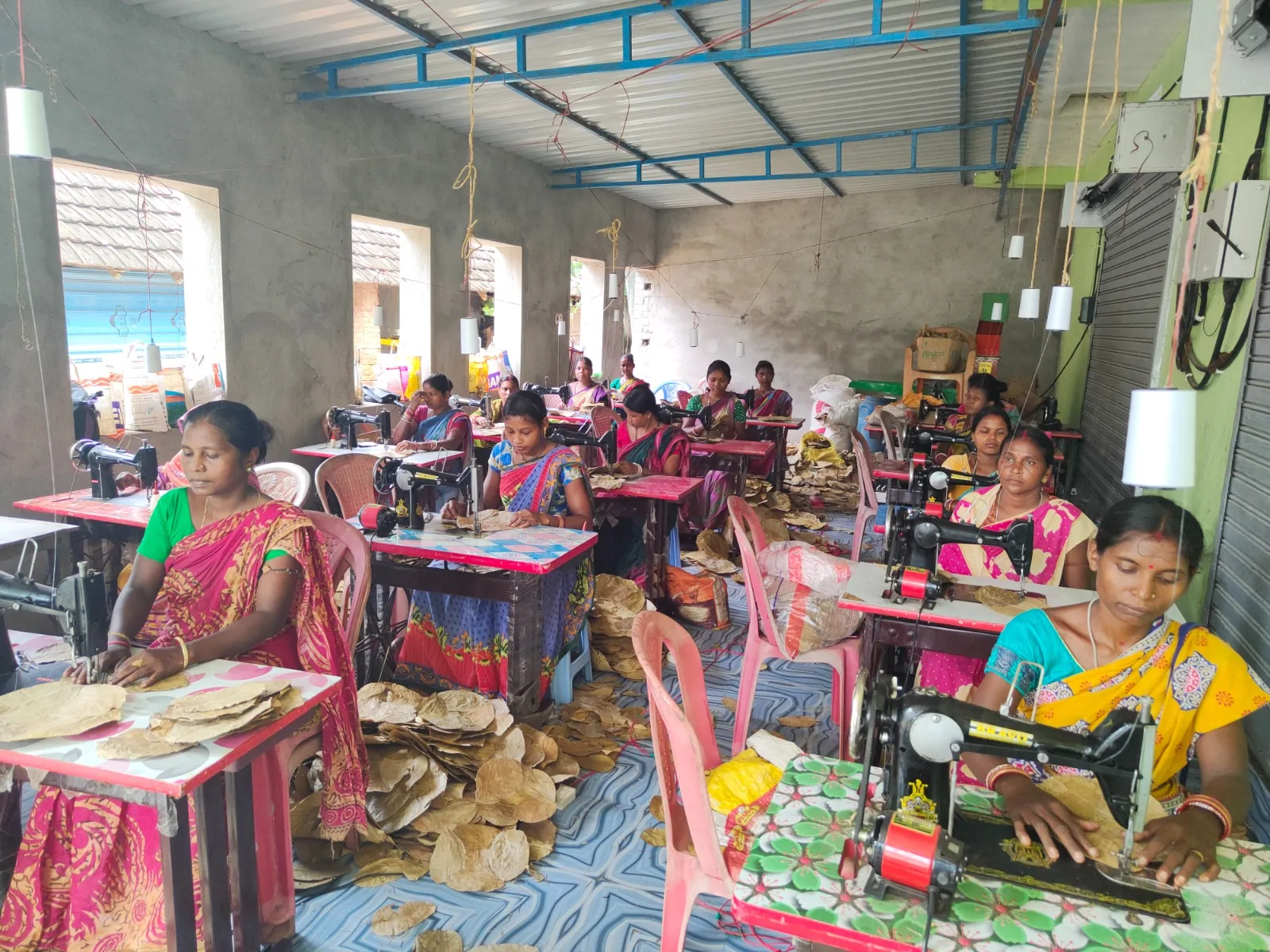
Local women stitch sal leaves to produce biodegradable plates, promoting sustainable livelihoods.
What Lies Ahead
The journey of the Maa Durga Devi Producer Company is a story of women who turned tradition into transformation. What started as a few rural women collecting forest produce has evolved into a thriving enterprise, where traditional knowledge meets modern sustainability, and collective action fuels real change.
These women are not just earning livelihoods; they are building a legacy.
With confidence and creativity, they are expanding into new plant-based products, exploring eco-friendly innovations, and bringing the essence of their forests to wider markets.
The impact runs deeper than income. It is about voice, visibility, and value where women lead with purpose, influence decisions, and inspire others to follow.
At FCF India, we believe that climate solutions are also people solutions.
What began as a local initiative is now evolving into a movement for women’s empowerment and sustainable living, proving that real change can take root even in the smallest villages and bloom far beyond.
