
Beyond Carbon: What a Field Visit to Jharkhand Taught Me About Agroforestry
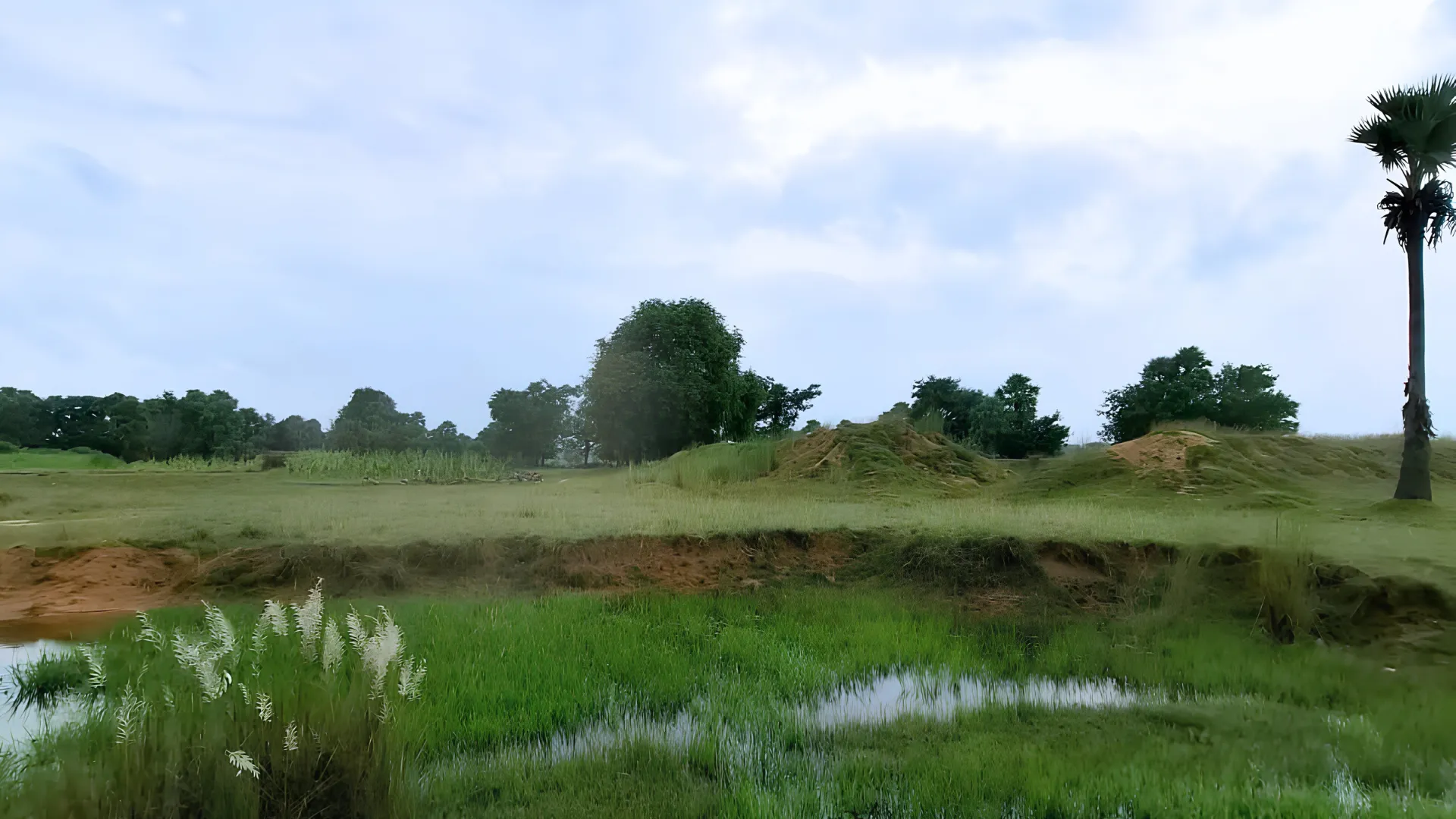
I mostly know carbon as a column
Most days carbon is a column in a sheet for me. Tonnes, hectares, survival rates, growth estimates. I check them, clean them, check them again. So when I went to Jharkhand to monitor plantations on farmers’ land, I think I expected the visit to confirm what the data already said. It didn’t really work that way.
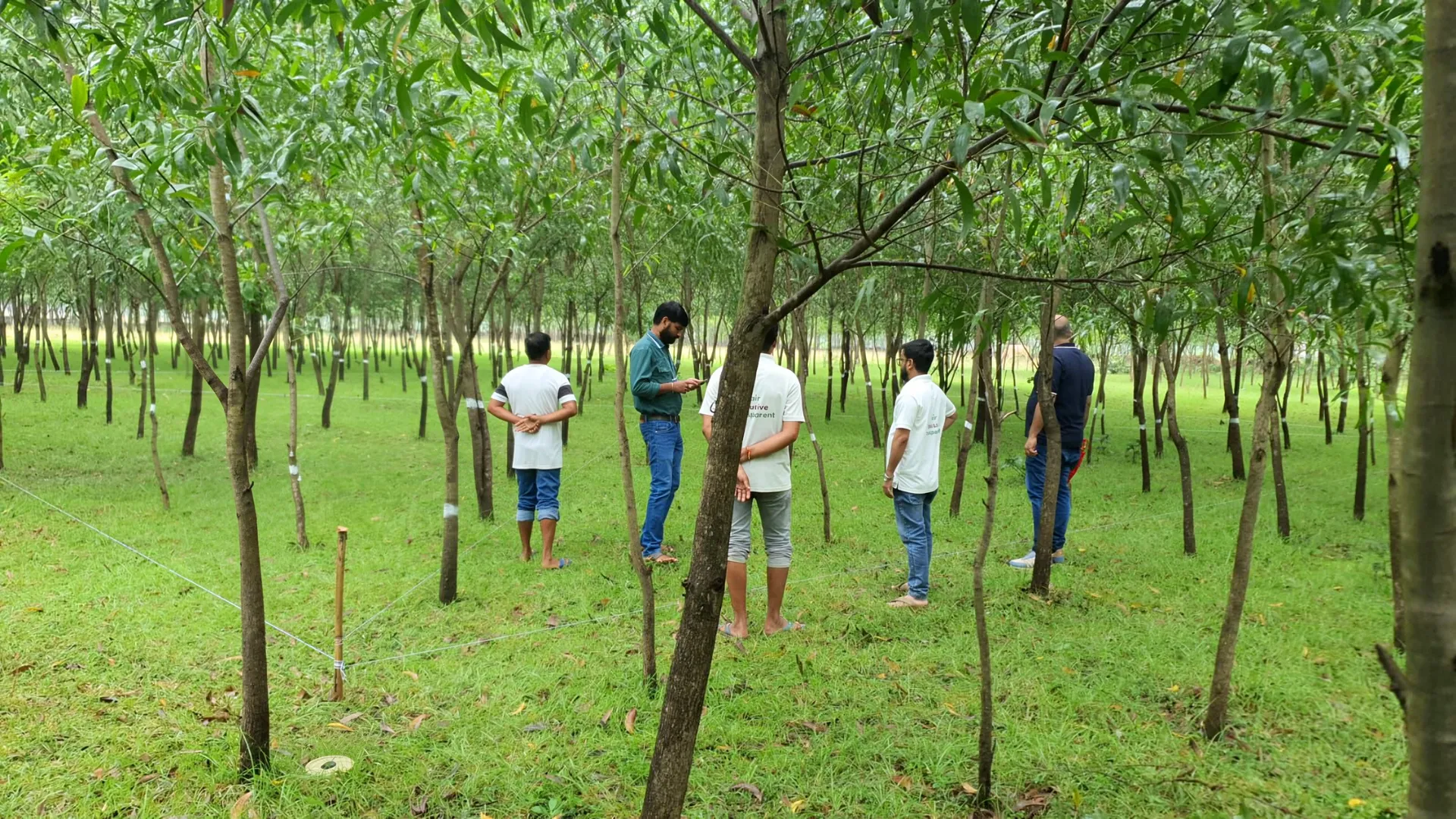
Walking a plot is slow. You count, you stop, you look at a tree that is clearly struggling and you try to work out why before anyone tells you. What struck me was how different the actual plots and plantation structures were from what we visualise while planning. On paper, calculations tell us how many trees a plot can accommodate and at what spacing, but the reality of the terrain often tells a different story.
These field observations are particularly important for agroforestry carbon projects India, where plantation planning needs to account for local land conditions, farming practices and the needs of participating farmers.
The idea is easy to say
Plant trees on farmland, let them grow, count the carbon. That is the version I could give you in one breath, and it is accurate enough. But every plantation I walked through was also a pile of decisions someone had made earlier. Which species. How far apart. Whether the shade would hurt the crop beside it. Whether the farmer would ever get fruit or fodder or timber out of it, and when.
Those questions don’t get answered once and are filed away. They come back every season. A tree that suits the soil can still be a poor fit for a household that needs every corner of the plot.
The trees share the ground with crops. Their leaves drop and the soil slowly gains organic matter. Birds turn up. All of that is real, but it happens quietly, and I suspect most farmers think about it far less than they think about whether the tree will survive.
This is also where agroforestry carbon sequestration becomes meaningful. The process of carbon sequestration agroforestry supports climate mitigation while contributing to healthier soils and more diverse agricultural landscapes. In India, these practices are increasingly relevant to carbon sequestration agroforestry India initiatives and the development of community agroforestry carbon credits India.
Planting is the easy bit
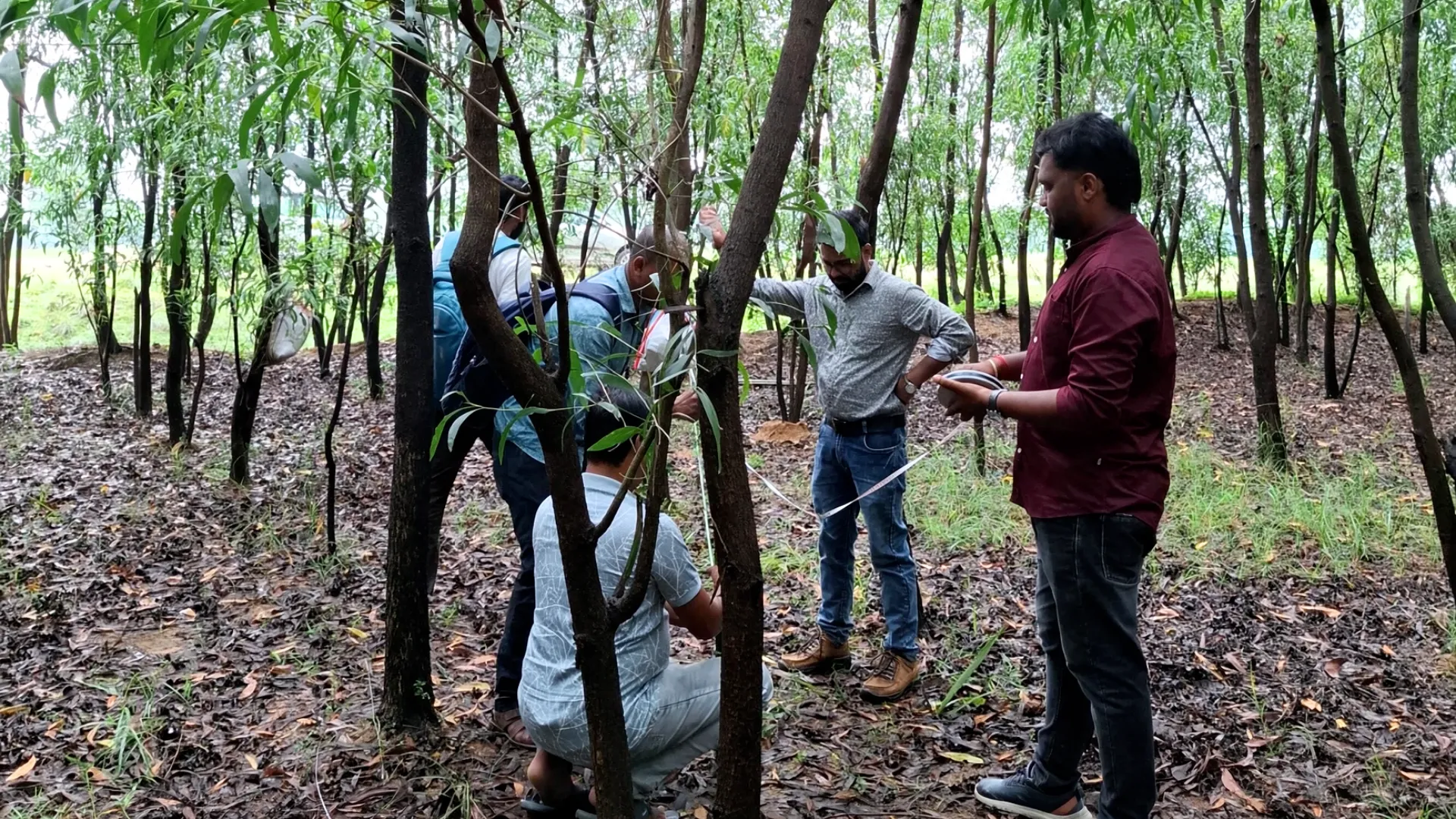
This is what I keep returning to. Putting a sapling in the ground takes an afternoon. Keeping it alive takes years, and it depends on small unglamorous things. Water. Goats and cattle staying away. Someone weeding. A reason to keep caring after the first year, when nobody from the project is around.
So what is monitoring for? Partly it feeds the project document, obviously. But standing in the field it felt more like a way of asking questions. Where are trees doing well. Where did they die. And then the harder one, why. Sometimes the cause was easy to guess. Sometimes it wasn’t, and the only way to find out was to ask the person who lives next to the plot. One farmer pointed out that keeping the saplings alive was not always easy, especially when water was scarce or cattle entered the plots.
I came away thinking the count matters less than the conversation around it. A survival rate tells you what happened. It almost never tells you why.
This is an important consideration for community agroforestry carbon credits, where the success of a project depends not only on carbon outcomes but also on farmers' continued participation and the long-term maintenance of plantations.
What a credit leaves out
A carbon credit on a registry looks very neat. One tonne, one number, one line. Behind a hectare in a project document there is a piece of land with a history and sometimes a few quiet disagreements about who uses which corner. Behind a tree count there is a farmer who agreed to share space for something that pays back slowly, and who is trusting that it will turn out fair. Behind a tonne there are repeat visits, replanting, and a lot of patience that never gets written down anywhere.
This is what makes agroforestry carbon credits different from simply counting trees. They represent the carbon benefits generated through long-term land management and plantation activities. Across agroforestry carbon projects, these outcomes can contribute to agroforestry carbon offsets while supporting farmers and local communities.
The growing agroforestry carbon market also brings greater attention to how these projects are designed, monitored and maintained. The development of the agroforestry carbon market India creates opportunities to connect climate finance with sustainable agricultural practices and rural livelihoods. Similarly, agroforestry carbon offsets India can support climate commitments through projects that combine carbon removal with wider environmental and community benefits.
I don’t think the final figure should carry all that. It has to stay simple to be used at all. But I do think anyone who works with those figures should stand in at least one field behind them. It changes how you read the sheet.
Taking it back to the desk
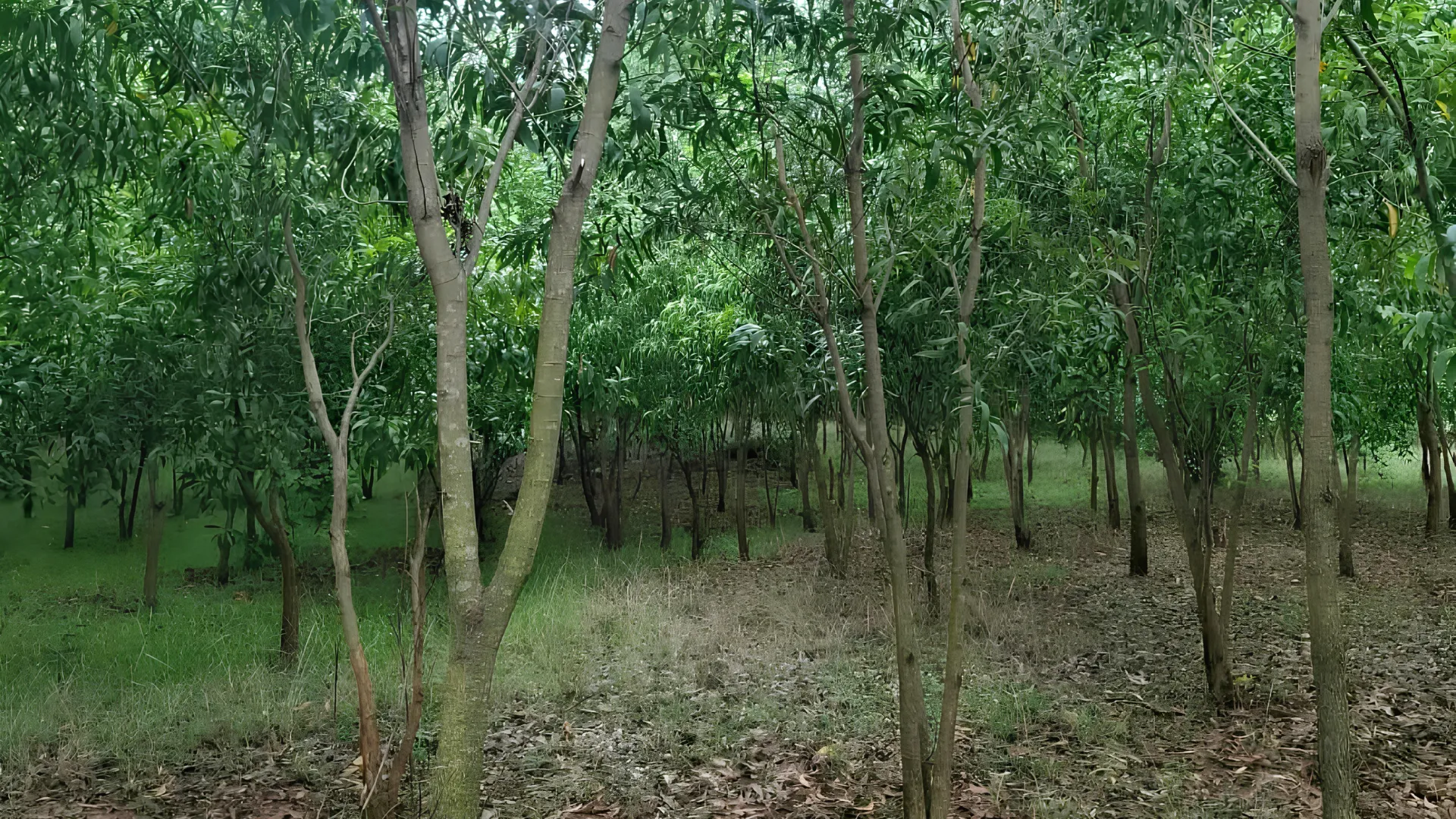
I came back with more questions than I left with, which feels fair for a first proper look. Agroforestry carbon projects are about carbon, sure. They are also about working with farmers so that land changes slowly, in a way that helps the climate and the people who live from it, and about whether those two things actually line up. Sometimes they do. Sometimes it takes work.
The numbers are still my job and I will keep at them. I just read them with a particular tree in mind now.
The same applies to ARR carbon credits, where successful carbon removal depends on the long-term establishment, growth and survival of trees. Ultimately, the value of agroforestry carbon credits India goes beyond the carbon recorded on a spreadsheet. It is also reflected in the changes taking place on the land and in the lives of the farmers who make those changes possible.