
What Determines How Much Carbon
an ARR Project Stores?
Wood density, growth, survival and permanence all shape the carbon outcome of an ARR project. Species selection influences several of these factors.
Two trees can have the same height and diameter and still store different amounts of carbon. The difference can come from the density of the wood, how well each tree survives, and how long its carbon stays stored.
In an Afforestation, Reforestation and Revegetation (ARR) project, the headline figure is the tonnes of carbon dioxide removed and stored over the crediting period. That number is estimated, not weighed. At the tree and stand level, the estimate depends on biomass, wood density, survival and the duration of carbon storage. Depending on the methodology, below-ground and soil carbon may also contribute to credited removals.
Species selection is therefore a project design decision that can influence the carbon outcome for decades. Growth rate is only one part of it.
How the carbon in a tree is calculated
A tree’s biomass is estimated from measurements such as diameter at breast height (DBH) and height, using an allometric equation. The estimated biomass is then multiplied by a carbon fraction to determine the carbon stored in that biomass.
The IPCC default carbon fraction for above-ground woody biomass is approximately 0.47, although individual methodologies may specify their own values.
Wood density is an input to many allometric equations. It describes how much dry mass is contained in a given volume of wood. Basic wood density commonly ranges from about 0.3 to 0.8 g/cm³.
At these extremes, two trees with the same DBH and height can differ substantially in biomass. Species choice therefore influences the carbon stored per unit of tree volume before the first tree is measured.
Why fast growth and high carbon are not the same thing
Tree growth is often expressed as mean annual increment (MAI), the average volume accumulated per year.
Fast-growing species can add volume quickly, particularly in the early years of a project. But growth rate alone does not determine how much carbon a stand stores over its lifetime.
A rapidly growing species may have lower wood density or may perform poorly on a particular site. A slower-growing species that suits the site and survives longer can continue accumulating biomass over a longer period.
A stand with higher early growth can therefore hold less carbon later in the project than a stand that accumulates biomass steadily and persists, because growth rate alone does not determine the amount or duration of carbon stored.
Survival comes first
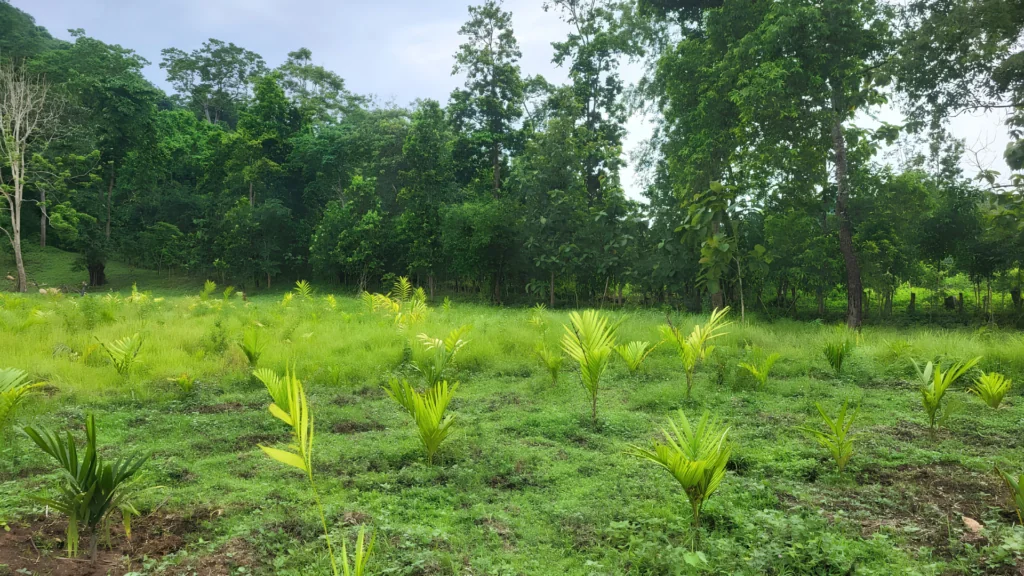
A tree has to survive before its growth, wood density or longevity can contribute to the carbon pool.
A tree that dies in its second year adds far less to the stock over a multi-decade project than one that survives and keeps growing.
Survival depends on how well the species matches the site: soil conditions, water availability, flooding, drought, pests, disease and grazing pressure. Establishment practices and long-term management also affect it.
A fast-growing species that performs poorly on a site can ultimately store less carbon than a slower-growing species that survives and continues to grow.
Ex-ante estimates account for expected survival. Monitoring plots then track survival over time, and tree losses are reflected in the carbon stock and verified removals.
Permanence: carbon has to stay stored
Carbon removal also depends on how long the carbon remains stored.
Trees can lose stored carbon through fire, drought, pests, disease, extreme weather or changes in land use. When stored carbon is released back into the atmosphere, it is accounted for as a reversal.
Carbon standards address reversal risk through mechanisms such as risk assessments and buffer pools, which withhold a share of credits to help cover losses when reversals occur.
For project design, this makes longevity and resilience important considerations alongside growth. Species that can survive and continue accumulating biomass under expected site conditions help maintain the carbon pool across the project period.
Roots and soil carbon
Roots contain carbon, and changes in vegetation can influence soil organic carbon over time.
Soil carbon builds and changes more slowly than above-ground biomass, and its treatment varies across ARR methodologies. Some methodologies include certain below-ground pools or soil carbon in credited removals, while others exclude them.
What this means for ARR project design
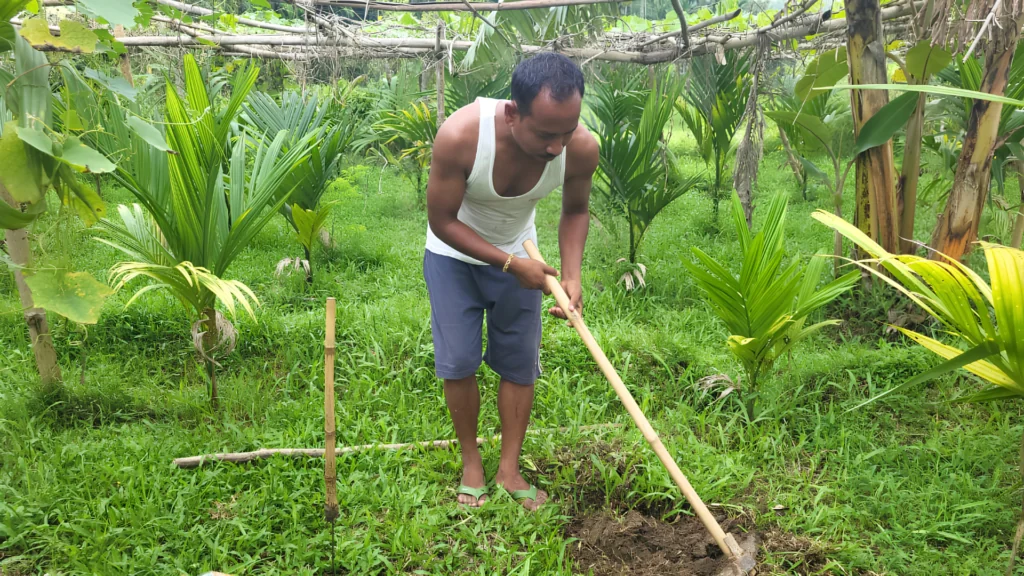
Species selection influences wood density, growth potential, survival and longevity. But species do not perform in isolation. The outcome depends on the interaction between species, site, establishment and management.
Project design therefore has to consider soil and water conditions, climate risks, local ecology, species suitability, survival and long-term management, not only carbon yield.
MRV measures how the project performs against that design. It shows how many trees survived, how much biomass accumulated and how much carbon is stored. It does not change whether the trees were suited to the site in the first place.
That is why the carbon outcome of an ARR project is designed in the field long before it appears as a number in an MRV report.